We Are Blind
To Watch this sermon, Click here:
To see the devotions associated with this sermon, click here.
WE ARE BLIND
Blinded by Expectations
Grace to you and peace from God our Father and from the Lord Jesus Christ, his son. Amen.
Sight plays an important part in both the first reading about the anointing of David, but also in the story of the man born blind. Samuel is sent to anoint a new king from the sons of Jesse. And upon seeing the oldest, Samuel assumes that this is the one whom God has chosen to succeed Paul Saul as king over Israel. When Samuel sees the oldest, he sees a man fully grown, with broad shoulders. He’s attractive and will command respect from his subjects.
But God says, this is not the one.
One by one, the sons of Jesse come forward. And God says, this is not the one.
Do you have more sons? Samuel asked Jesse. And Jesse says, my youngest is in the field with the sheep. And Samuel says, send for him.
I imagine it must have taken a little while for them to send for David, because it’s not likely. The fields were down in the backyard. They may have had to wait an hour or two hours while they went to get David and bring him back. But David comes, and God says, this is the one whom I have chosen. David, a child, sunburnt.
And Samuel is surprised by God’s choice. But God tells Samuel not to be blinded by appearances. God knows David’s heart and mind. His body will mature, and he too will soon have broad shoulders.
The Man Born Blind
There are other types of blindness in our gospel reading this morning. There’s the obvious, the man born blind. There is the blindness of some of the Pharisees who are outraged that Jesus healed on the Sabbath. And there’s the blindness of the townspeople, some who say it can’t be the same man who was born blind.
And others people saying it is the same man.
So that leaves us with the question of what it means to see.
The Limitations of Our Sight.
Once upon a time, courts gave a lot of weight to eyewitness testimony. But with the advent of DNA evidence, we are beginning to see the limitations of the eyewitness. Approximately 70% of wrongly convicted persons who have been exonerated based on DNA evidence were were convicted because of mistaken identity by an eyewitness testimony.
Science tells us that while our eyes gather information and Pictures of the world around us. It is our brains that interpret. It is our brains that make sense of the things that we see.
Its interpretation and all interpretation is impacted by personal experience, knowledge, and by prejudices, good and bad.
Which brings me to my visual. Have you all seen this picture before?
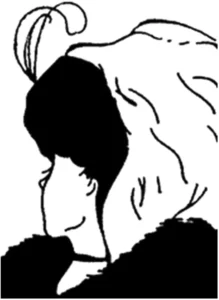
Some people, when they look at this picture, see a young woman, and others see an old crone.
Who’s right?
It’s an optical illusion.
Different brains see different things. Well, they see the same thing, but they interpret the images differently.
It shows us the limitations of our sight.
No One Has Perfect Vision
Now, Samuel is considered to be a great person in Hebrew history. He was the last of the judges. He was the first of the prophets. And even he was blinded by his expectations.
We tend to think of the Pharisees as bad people. But the reality is that the Pharisees were everyday people trying to be faithful to God, who wanted to live according to God’s law and commandments. They were people who memorized and studied the Scriptures. They attended synagogue on a regular basis. They were a lot like us, and yet they were blinded by their limited understanding of God.
They thought that their way of being faithful was the only way to be faithful. And Jesus defied their expectations. He healed the blind man on the Sabbath, evoking the outrage of some in the synagogue leadership.
Some of the townspeople were convinced that the man walking around the town could. Could not be the same man who sat at the gate.
It was impossible, because this man could see. They were blinded by their understanding of the world. As human beings, we all have areas of blindness in our life. We do not have perfect vision. And today’s lessons call us to acknowledge our limitations, to recognize that none of us sees as God sees.
We are all Blind, in Different Ways
And as such, we need to be careful about casting judgment on others or asserting that we have the full understanding of God’s will for the world.
God has promised to always love us, to always forgive us.
And in the gospel today, Jesus restores sight to a man who had been born blind, reminding us that Christ is always at work, bringing light where there is darkness. And when our own blindness, our own misconceptions, our own mistaken ideas cause us to stumble, Jesus is there to pick us up without condemnation, without anger.
Brothers and sisters, we are all blind, probably blind in different ways.
And yet, because of the grace of God, because the promise from God to forgive our sins, to forgive our blindness, we know that when we enter the kingdom of God, we will see. We will see as God sees with perfect clarity.
St. Paul writes, now we see through a mirror dimly, but then we shall see in full. Amen.